

How My Community Writes My Substack Notes
A 30-minute system for creatives who'd rather be making art


In Short: A thirty-minute system that grows my Notes from real conversations — so my time for art stays protected.
Substack Tracker: I use this daily — comment “system” and I’ll send it for free.
On My Radar: Seth Werkheiser is a legend and helps wean us off social media.
Introduction
Today’s Substack is a short essay about how my community writes my Substack Notes.
Eh? Let me clarify:
As a creative you want to build an audience, and yet the process of building an audience eats away at the time you have for making art.
We want to approach social media in an easy way — shooting from the hip because it feels authentic.
But then you are suddenly busy at work and you don’t post for a month. Or you start concentrating on this “audience building” business and find that you are not actually creating anything.
Exhaustion and social aspiration — two enemies of art.
The answer for me wasn’t to find more time for generating ideas. It was rather to draw my creative short form from my conversation with my audience.
Today I will share a very simple system which has doubled my subscribers, deepened my community and bought me back time for my two creative passions: music and writing.
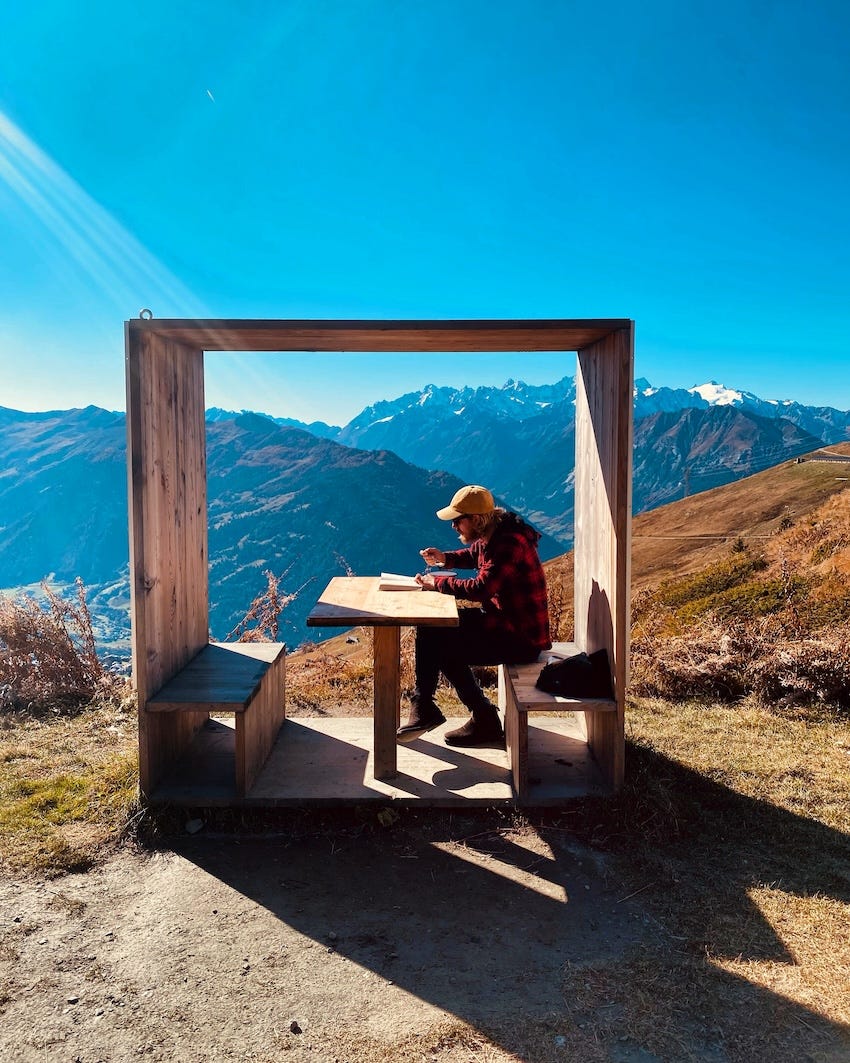
Wandering the Alps in 2022 wondering if I’ll ever release any of my writing. I started Substack 2023
Why Systems?
Many artists don’t like systems, yet wonder why they never have time for deep creative work.
I’d counsel you to reevaluate. I don’t see systems as ways of being productive; I see them as ways to buy back non-productive time.
This is the opposite of how businessmen see systems, which is all about maximising time and buying leverage.
I want instead to protect what is most precious to me: my creative life. That is how my heart stays connected to the world, and how I interpret its pulse.
So I treat my creative process not as something that happens in my studio, but as a philosophy of life — not just what I create, but how I engineer my life towards the space for creativity. A living organism I tinker with every day.
The following approach to Notes is simply one part of that.
Below, I’ll show you what my thirty-minute system looks like — but first, the thinking behind it.
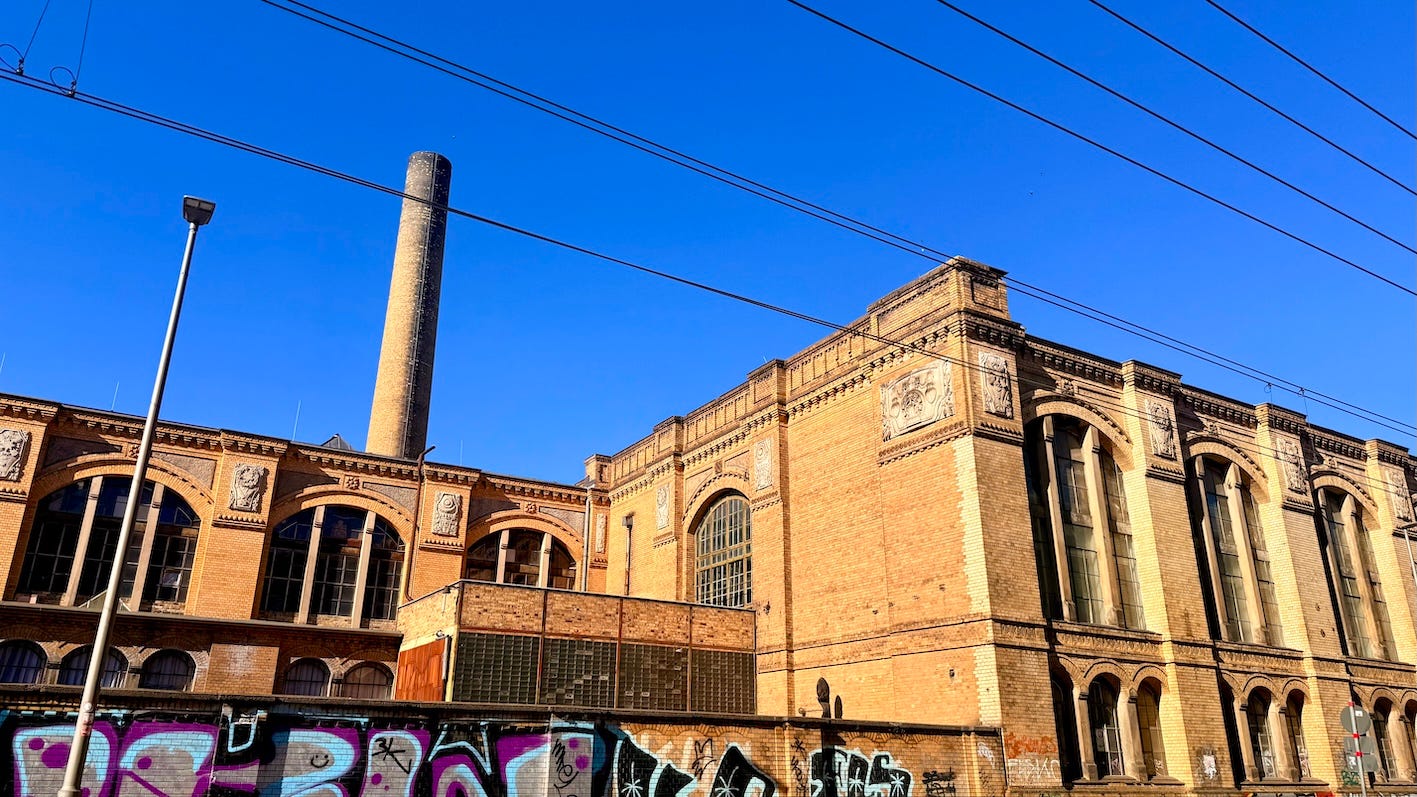
Mahalla Art Community, where my studio is based in Berlin
Your Audience Is Speaking To You
I go onto some accounts on Substack with 80K followers and there is no conversation.
My own was like this until I started looking at Substack not as somewhere — to put it bluntly — that I talked at people.
Now, it is where I talk with people.
Slowly, it is becoming what I first hoped it would be: a living community of creative spirits.
I give part of my day to helping people with their problems and pain points, and Substack is where I do it.
I’m precise about it, too: thirty minutes a day.
I hard limit it because I have a busy life.
In that time I not only engage with my community — but write and schedule a minimum of two days of Notes.
It is not about being in a rush or trying to “get it done” either.
It is a creative flow — a system. Let me walk you through it.
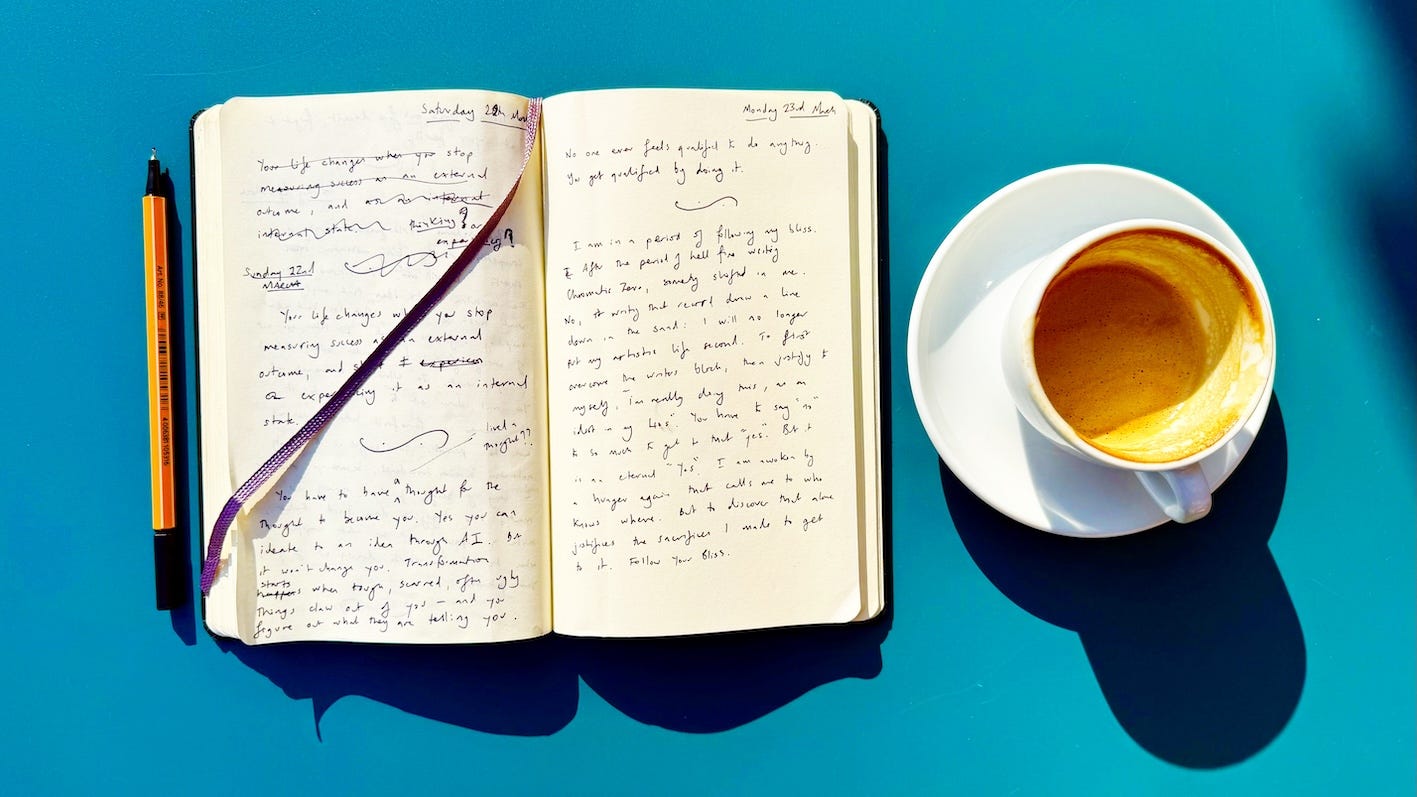
Scrappy musings, Spring Berlin
The 30-Minute-Flow
Thirty minutes, start to finish. Seven small moves.
1. Open with a shortcut
My friend Seth Werkheiser introduced me to Raycast. One of my favourite features is that I can set up shortcuts to the websites I use every day.
So my first move is to press: ⌘T
This brings up my Substack Tracker.
I spend zero time wondering where to start. I'm not even browsing. The tracker is simply there — and that takes the deciding out of it.
2. The Tracker
My tracker is a web-based app that I built to stay accountable on Substack.
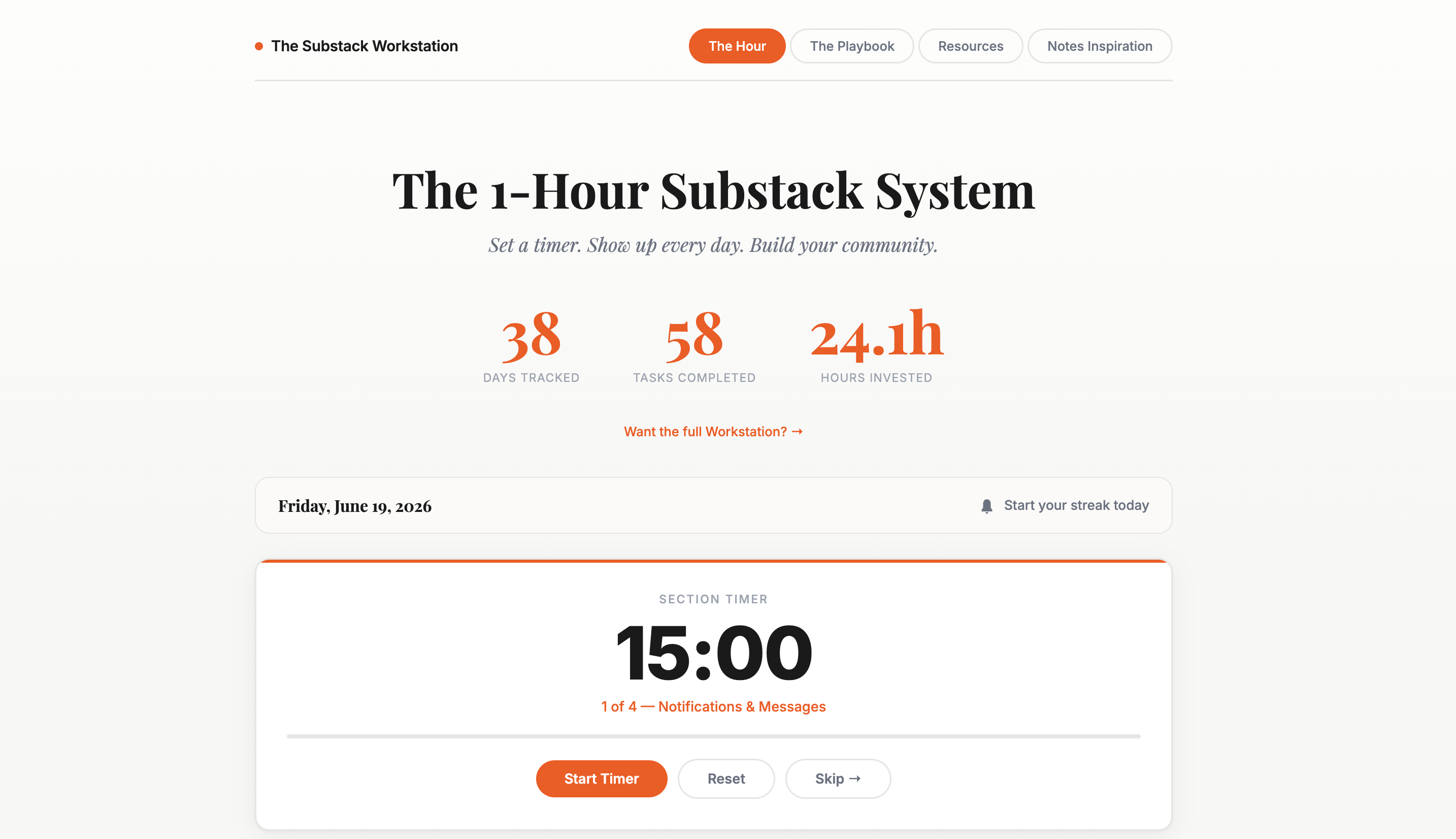
I don’t use it as a tracker, though — I use it to guardrail the time I spend on Notes. I don’t want social media eating up my week, but I do want to show up consistently.
It simply hands me the tasks I do every day, so I don’t have to think when I’m busy or exhausted.
Also, it protects my mental energy by systematising something I’d otherwise have to decide each time — and that energy is saved for creativity and for business.
I use it every day, and you can have it for free below. If you’re already subscribed, write “Yes” in the comments and I’ll DM it.
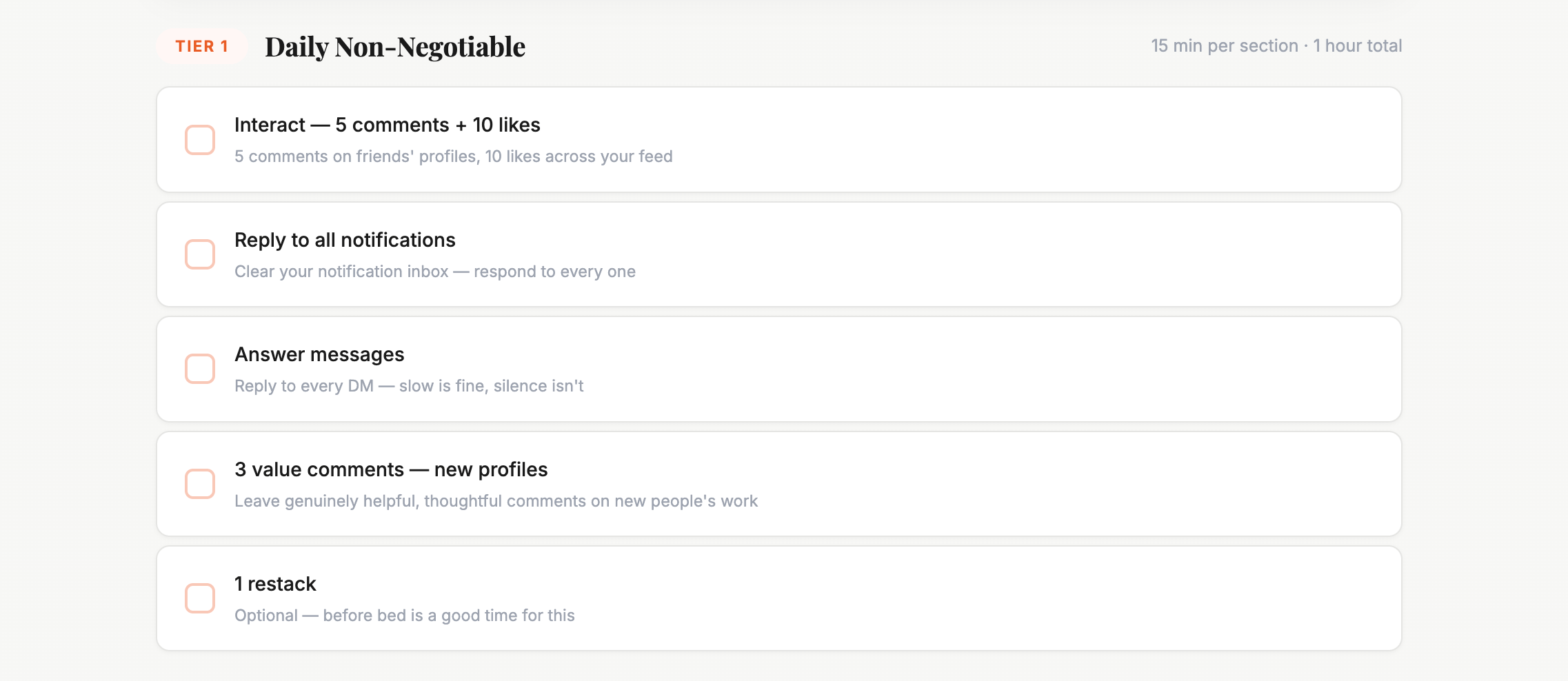
I love check list because it guarantees I show up even if I’m feeling low or unmotivated. Growing a newsletter is a long and slow business, and this has revolutionised my daily approach. .
3. Listen to the community
Once I’m in Substack I either go through my notifications or browse Notes, listening to what people are talking about.
Substack is like a collective psychological tapestry of humanity. Read its quilt and you bear witness to the widest arc of what it means to live in the modern age.
Each of us faces our own challenges. Each of us is wrestling with something every day.
I drop a few short comments — but after a few, I’m always struck by a thought:
“Yes — I have a deeper take on this one”
In these moments your own experience and history are stimulated, and there’s a chance to help someone with it.
So I take it. I respond as deeply as I can.
4. Dictate, don’t type
I don’t type my replies — I dictate.
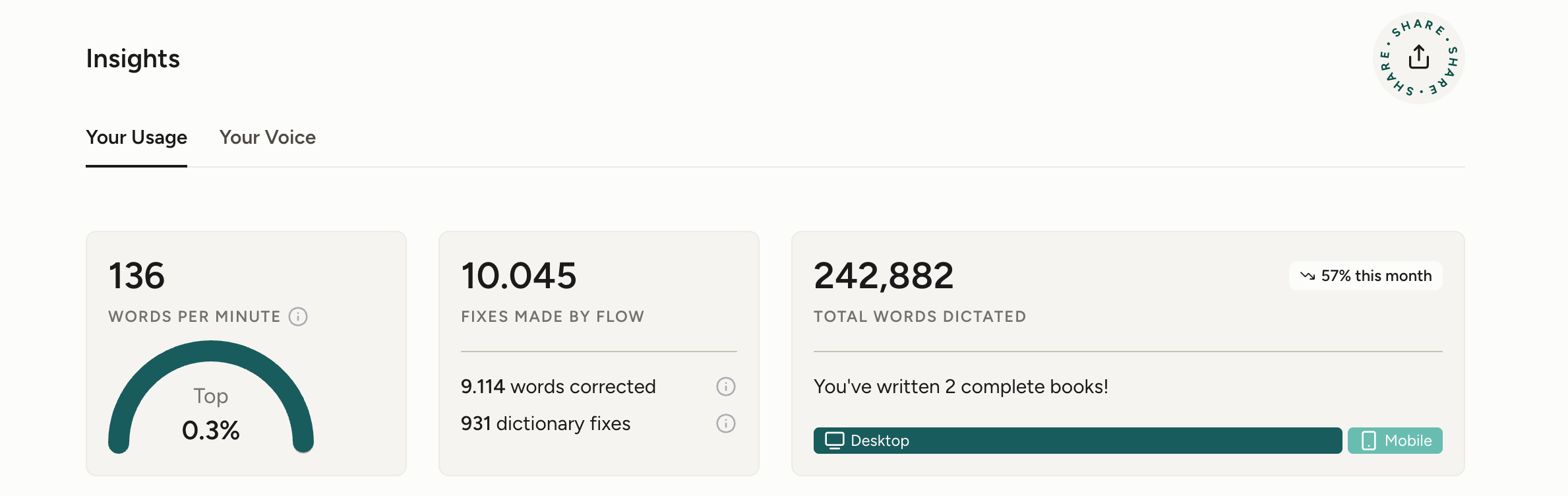
I use an app called Wispr Flow and it is always open on my computer. I use the shortcut 🌐 (fn) which activates voice mode, and then I shut my eyes and speak.
The only time I type any more is for creative writing — Substack, lyrics, diary, or my book. Otherwise I’m dictating.
About half of the 242,882 words I’ve dictated through this app are responses to my community on Substack.
It has done two things.
First, it has helped build not just a living community but a network of creatives around the world, all moving forward together. I love my local scene in Berlin — and I’m just as grateful to take part in a broader global one. What a daily education!
Second, it helps me speak better. Writing is a fine way to formulate ideas, but calling on them in real time is a separate discipline. Most of us lean on verbal scaffolding by default. For me, creative life is the adventure of letting ideas permeate in real time — and having access to that innermost source.
That takes training. Wispr Flow gives me a daily training ground.
5. Convert to a Note
Reply posted I now use a second shortcut: ⌘W
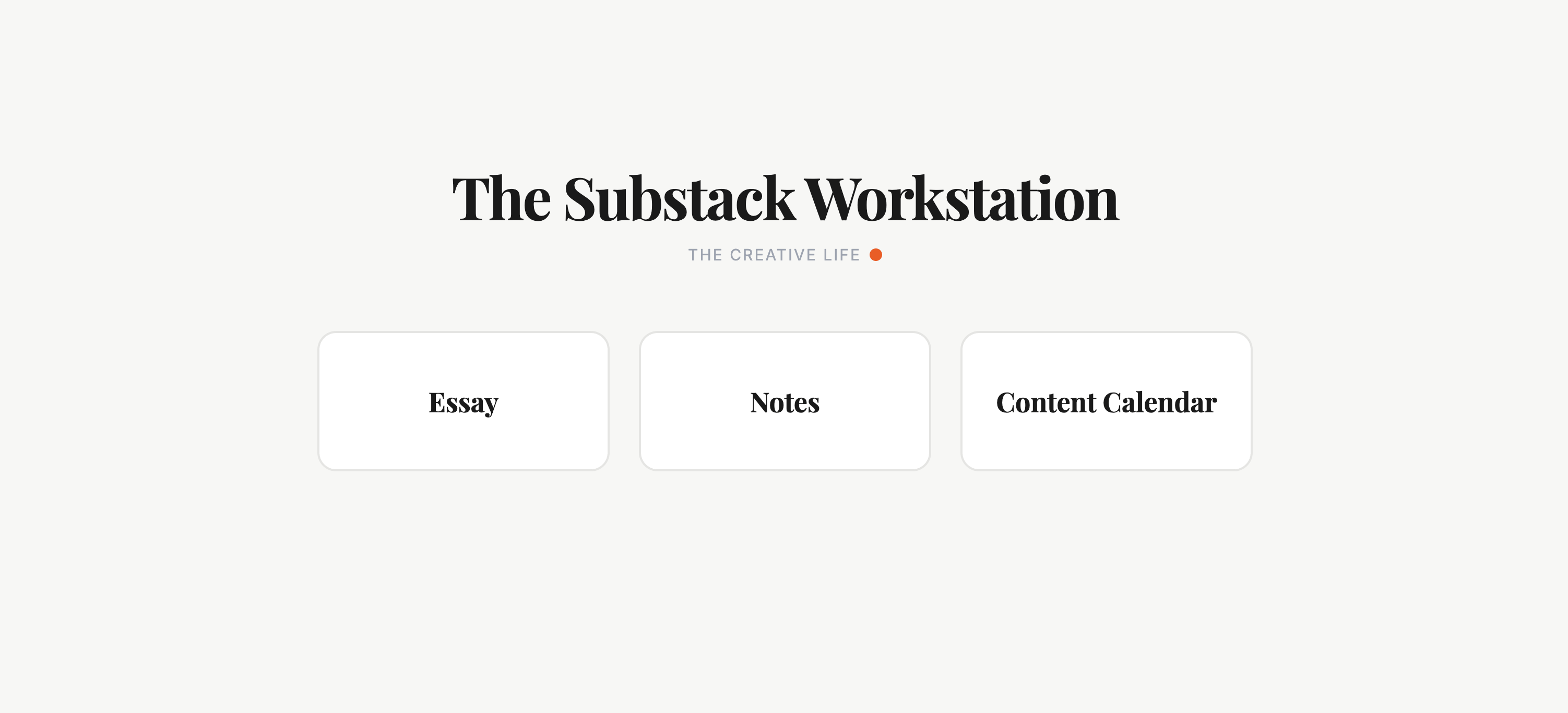
This opens up “The Substack Workstation”
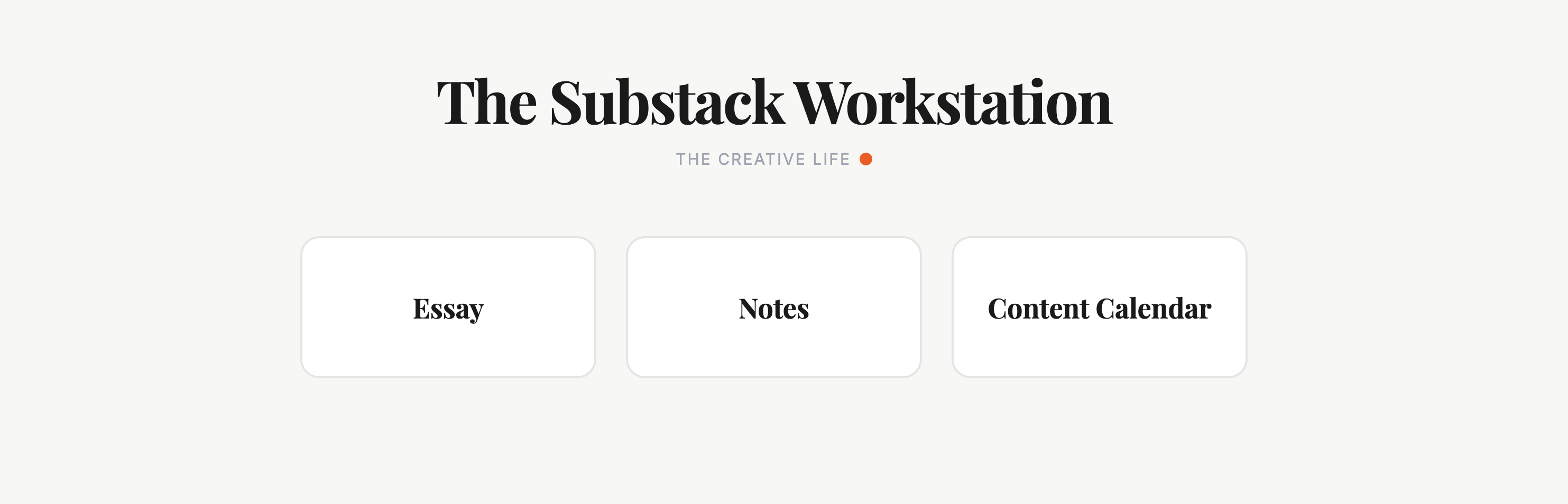
In here I gravitate to the “Comment To Notes” section.
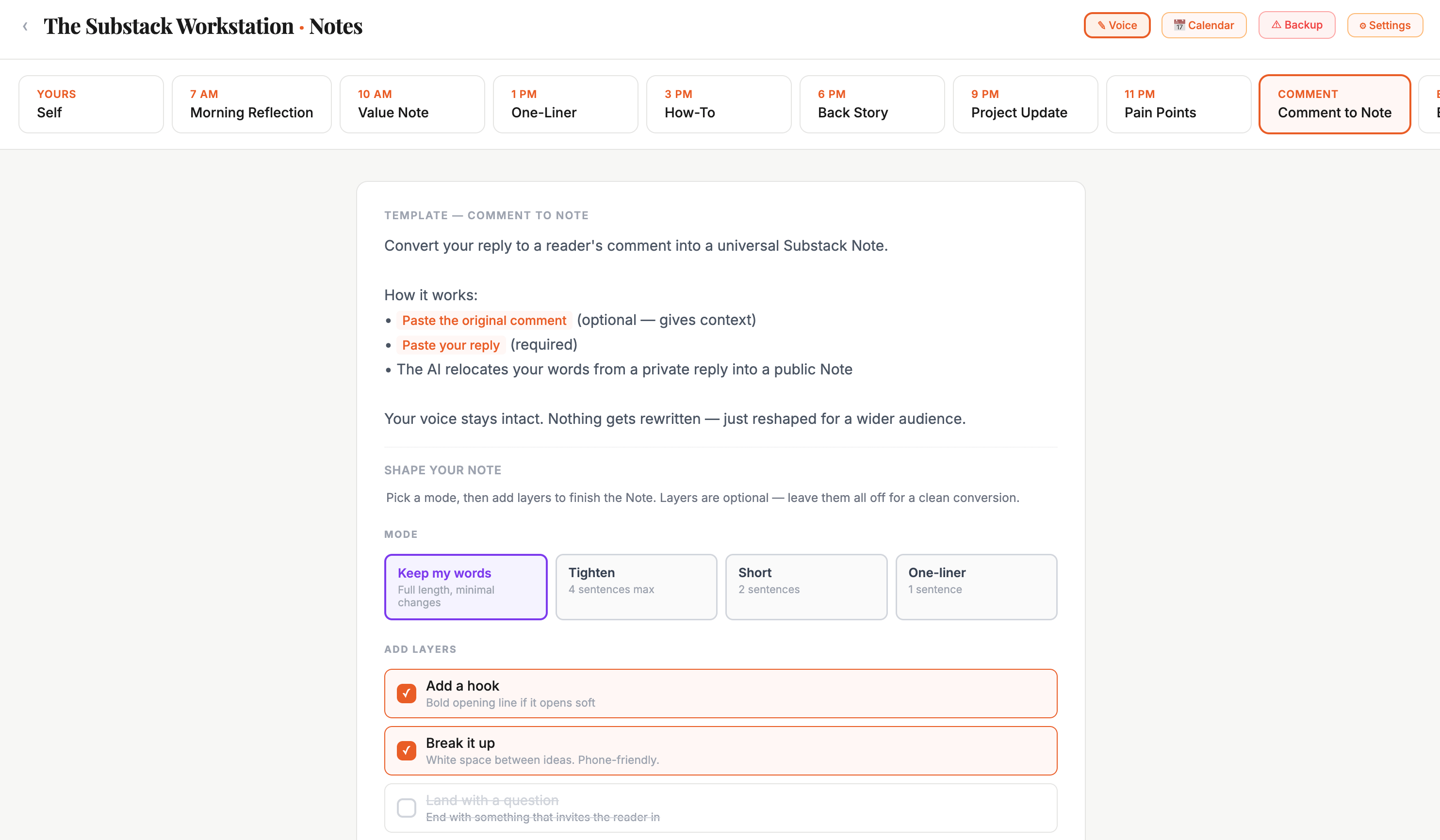
Very simply, it turns a comment-thread reply into a standalone Note — one of the workflows that inspired me to build the Workstation in the first place.
I was spending five minutes a day rewriting a comment I’d dropped to turn it into something that could stand alone.
My thinking was often sharpest, and most detailed, when responding to an exact pain point — so I found myself universalising these comments daily. Even one could take half an hour.
Now I simply drop it in and format it. What I love is that it’s designed not to change my words.
It strips out the conversational scaffolding — the “yes, exactly” and “thanks for this” — so what’s left is the standalone thought.
It shapes the idea outwards: from one person, to everyone.
6. Schedule
Once I’ve reviewed the Note, I schedule it in Substack for the following day.
But this triggers a flywheel!
7. Repackage across formats
Something many people miss about “content” is that you can repackage the same idea through different lenses.
This isn’t about repeating yourself. It’s about understanding that a new format reframes an idea — gives it a different way in.
My comments are often long and in-depth. So I’ll think: how could I ventilate this idea better?
I take the longer version and reskin it — as a “Value Note”, a “How-To”, or a “One-Liner”.
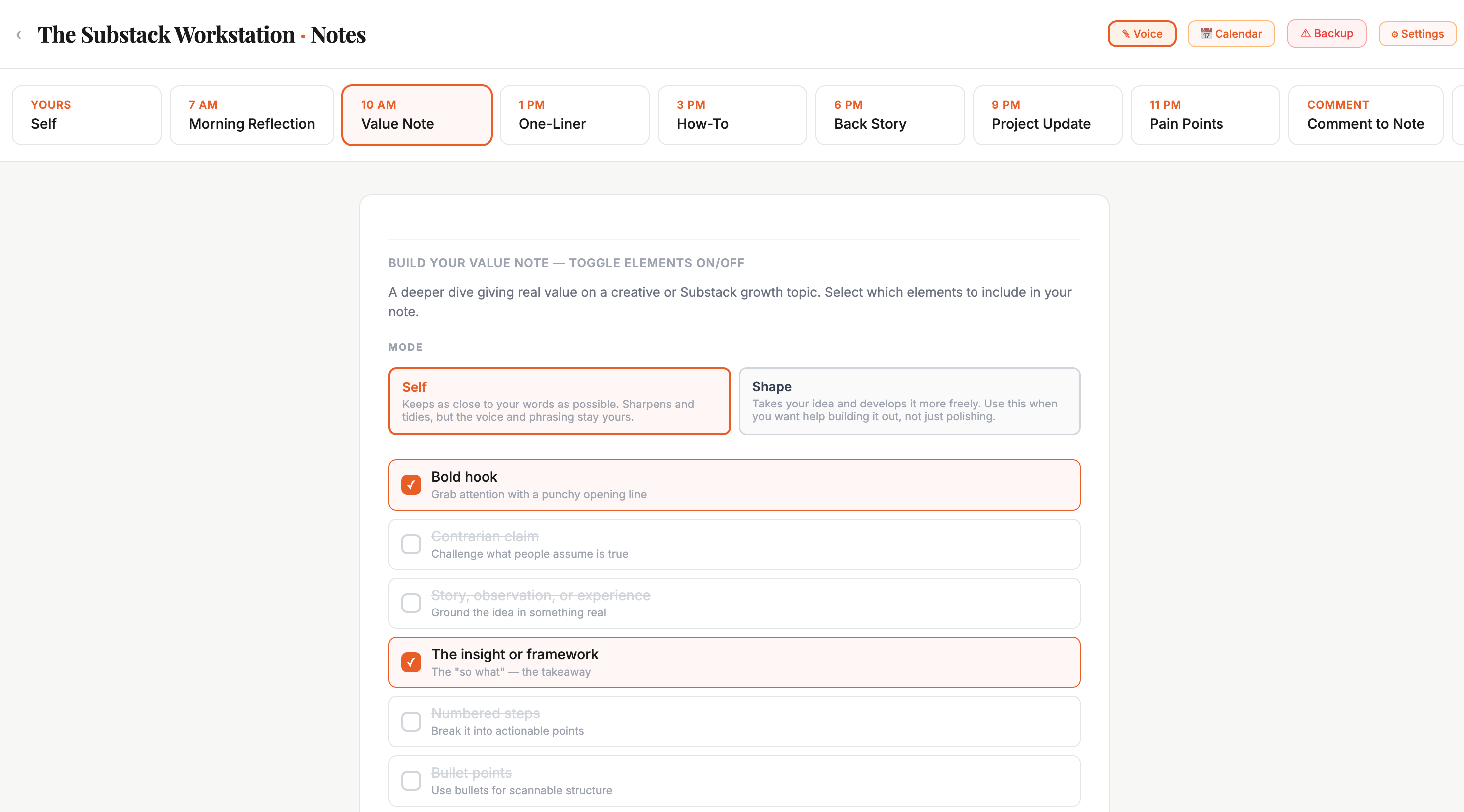
If I find a format I like the feel of, I'll schedule that new Note for a fortnight after the original.
8. A Living Conversation
Being inspired by my audience means my Notes dig into what people are actually thinking about.
There is no guessing. No wondering.
These are real pain points, real challenges faced by the community — and it gives my Notes an animation, a texture coloured by the reality of creative life.
They aren’t assumptions about what I think is hard. They are a living conversation with the world itself.
The effect is that my thirty minutes a day concentrates my mind not only on the individual, but on the greater narrative — what Goethe called the eternal mind: formation, transformation, the eternal mind’s eternal recreation.
And I’d encourage you to think of Substack as different from an artwork. In an artwork you are mining your own battles, your own yearning, your own conversation with life. Substack is about exchange.
9. A Message Distributed Through Content
The effect of all this is that one concentrated, deep thought becomes an ecosystem.
Each comment becomes three Notes, distributed evenly as scheduled posts, two weeks apart.
The same thought, offered in new ways.
Most of us don’t need new information. We just need reminding of what we already know.
People follow you for your message and your values — and content is simply the effort you make to convey those values in different ways.
The same, but new.
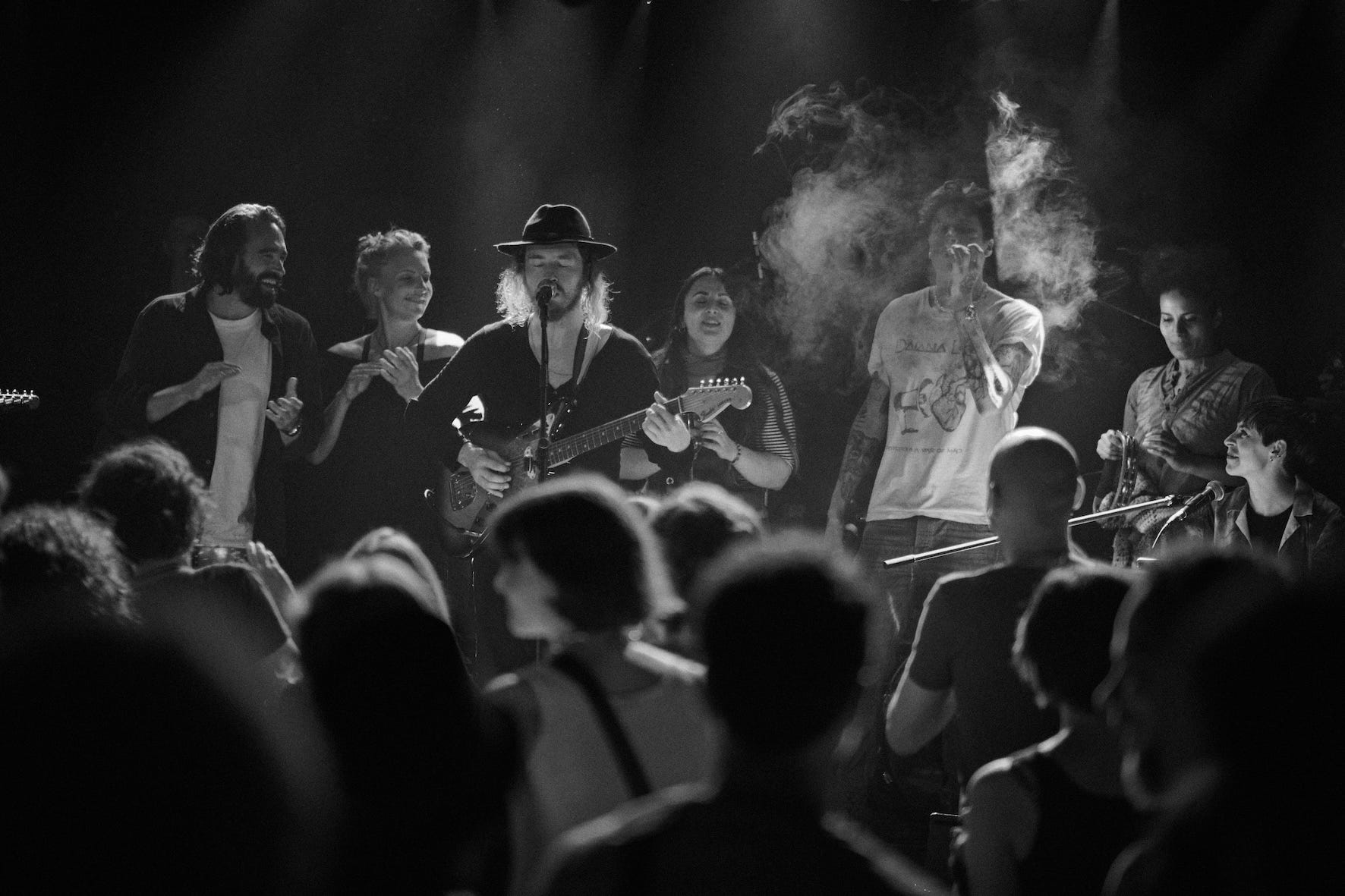
My first Berlin show after the pandemic, 2022
The Freedom of a Fly Wheel
I’ve outlined today how thinking differently about one small aspect of my life solved several problems at once.
I don’t want a life built around “content” or “audience building”. But I do want to participate — to know people.
By putting what matters most to me — helping people with their creative life — at the heart of what I do, I make depth my foundation. From there, I take that first effort and turn it into a flywheel.
There doesn’t have to be a choice between “content” and “art”. There doesn’t have to be a choice between “building an audience” and “deep creative time”.
What you do have to do is challenge your own assumptions. For me, that meant facing how often I felt divided between art and audience — and then resolving that, rather than choosing one or the other, I’d look for a third way.
Those solutions have cost me untold hours of thinking, researching, experimenting, building. And it’s one of the real joys of my life to share what works, here, with you.
Finally — I’d love to know how you’re thinking about content, so let me know in the comments.
With love,
Jim

Start Your Flywheel
If you’ve been reading this newsletter for a while, you know the tension I write about — the one between making art and making content.
I built this tool to resolve it:
The Seven-Note Cadence
A workstation for promoting a creative life
Try it today for free
Built by a creative, for creatives.
By the way, I have forwarded this on to a number of my fellow creatives who can benefit from the wise words you've offered. Thank you so much.
RAYCAST!!!! So glad you're loving it :))))